 Bethlehem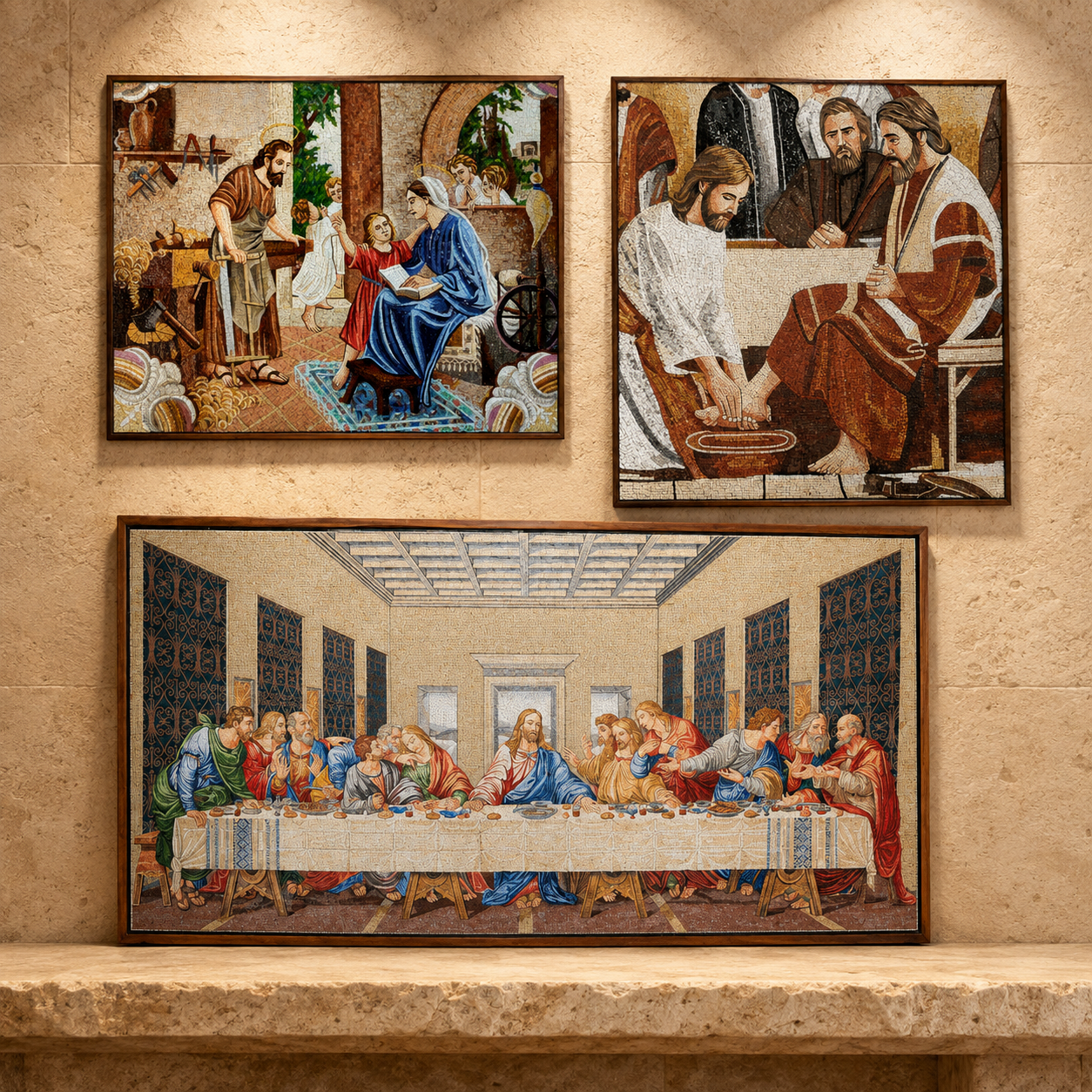
Choosing a handmade mosaic is different from choosing a printed poster or a mass-produced decoration. Because each piece is built by hand from natural stone tesserae, a good choice takes into account not just the image itself, but size, placement, color, and a handful of practical questions that make the difference between a mosaic you love for years and one that never quite fits its intended space.
Start with Subject and Meaning
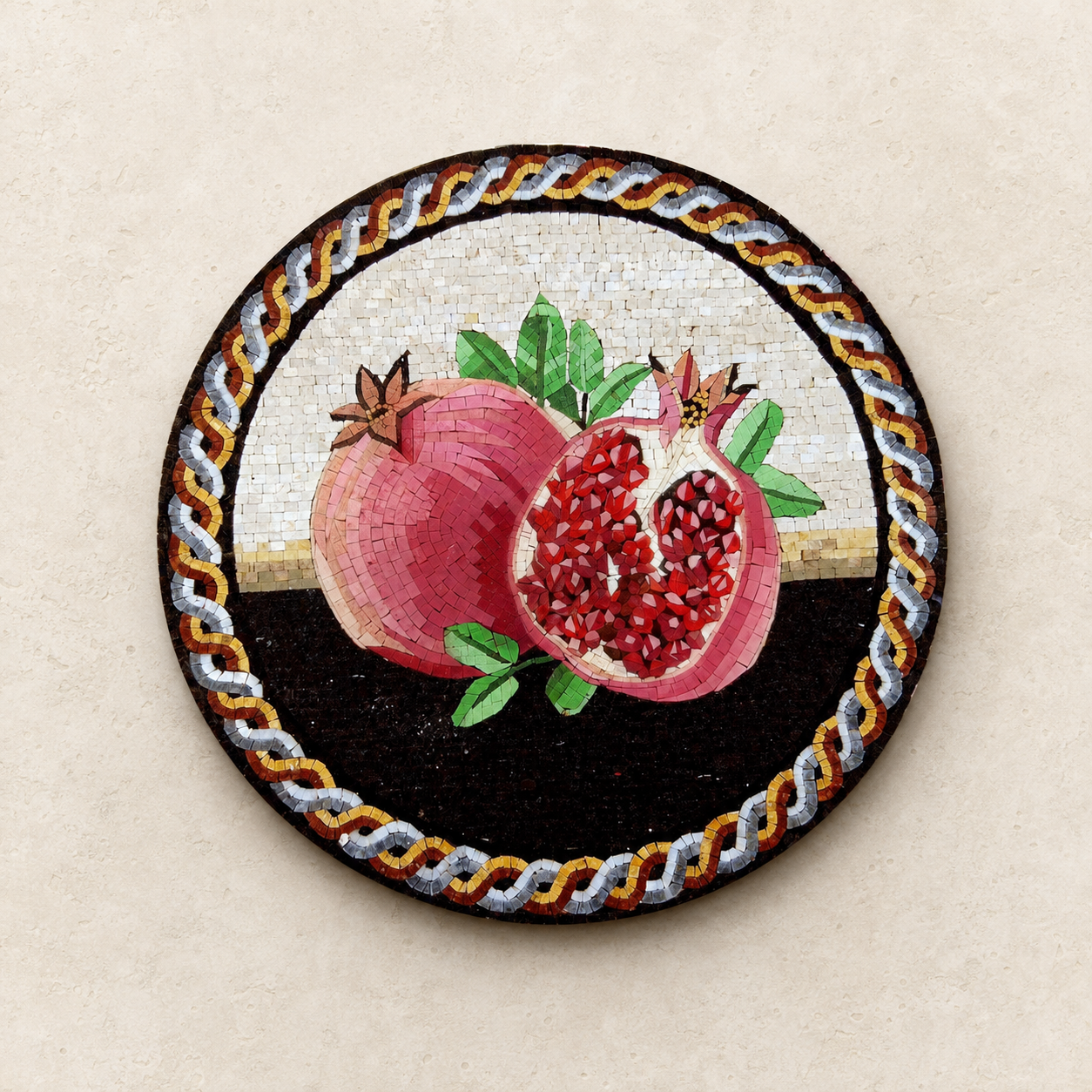
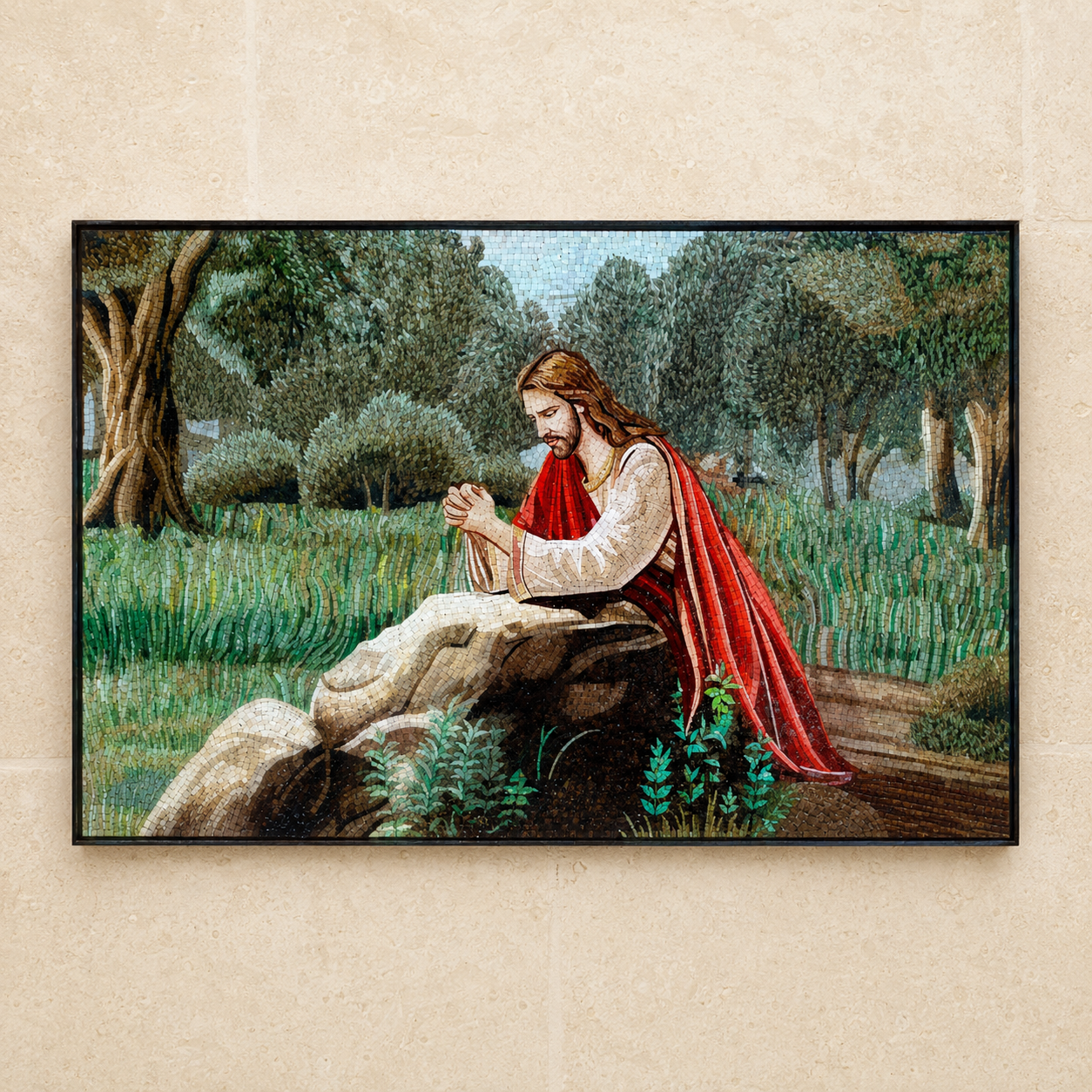
Begin with what the piece is meant to represent, whether that is a devotional subject like the Virgin Mary or the Good Shepherd, a biblical scene, or a decorative nature motif. Consider who will see the piece most often and what feeling you want it to bring to that space: comfort, reflection, celebration, or simply decorative warmth. Our articles on Christian mosaic symbols and their meanings and Virgin Mary mosaics can help you think through what a particular subject tends to express.
Dimensions, Orientation, and Viewing Distance
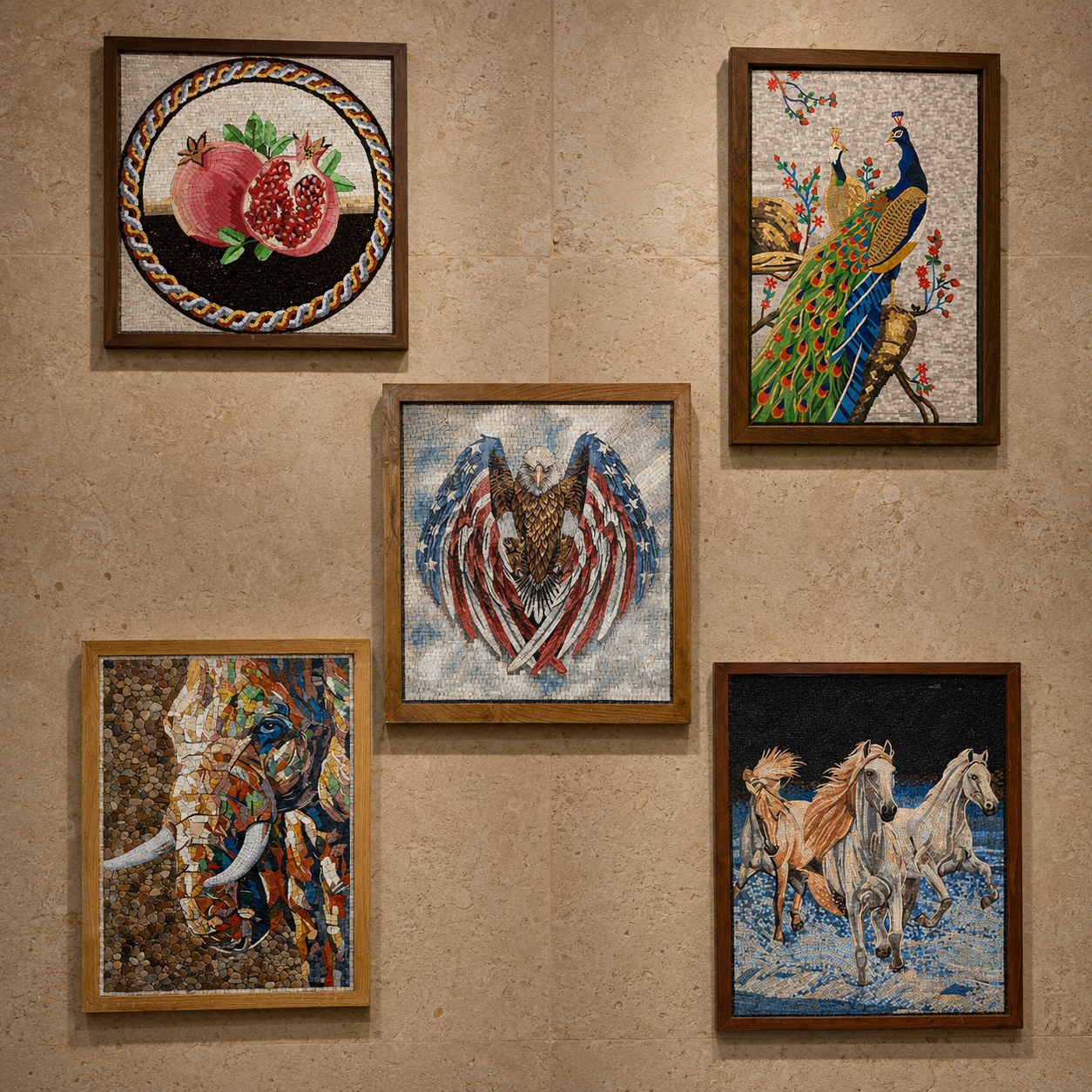
Always confirm the exact dimensions listed on a product page before ordering, since mosaics vary considerably in size. Think about where the piece will hang and how far away most viewers will typically stand from it: a small, detailed mosaic rewards close viewing, while a larger piece intended for a hallway or entryway benefits from bolder, simpler composition that reads clearly from a distance. Orientation, portrait or landscape, should also match the wall space you have in mind.
Color and How It Will Sit in Your Space
Natural stone tesserae bring warm, earthy tones rather than bright, uniform color, so consider how a mosaic's palette will sit alongside your existing wall color, furniture, and lighting. A piece with deep, warm tones can anchor a room, while a lighter composition may work better in a smaller or dimmer space. Product photographs are a helpful guide, but keep in mind that natural stone can look subtly different under different lighting conditions.
Indoor Suitability, Weight, and Installation
Most stone mosaics are intended for indoor display; confirm this on the specific product listing rather than assuming a piece is suitable for exterior or high-moisture locations. Stone artwork can also be considerably heavier than a framed print of similar size, so check the listed weight and confirm that your wall, mounting hardware, and chosen location can support it safely. For larger or heavier pieces, professional installation is often the safer choice.
Framing, Budget, and Lead Time
Framing style, budget, and lead time all vary by piece and should be confirmed directly on the product listing or by contacting Holy Land Shopping before you order. We do not state fixed prices, production times, or framing specifications here, since these details are specific to each artwork and can change; always check current information before purchasing.
Shipping and Authenticity Questions Worth Asking
Before completing a purchase, it is reasonable to confirm a few practical points directly with the seller: expected shipping timeframe and cost to your location, packaging method for a heavy, handmade item, and return or exchange policy. On the question of authenticity, look for a clear description of materials, natural Holy Land stone tesserae rather than printed or manufactured imitation, and feel free to ask directly about how a specific piece was made if the listing does not answer your question.
| Setting | What to prioritize |
|---|---|
| Home | Personal meaning, color harmony with existing decor, and a size that suits the wall without overwhelming the room. |
| Church | Larger scale for visibility from a distance, durability, and a subject appropriate to the specific space, such as an entryway, chapel, or hall. |
| Office | A calm, welcoming subject and a size proportioned to the wall, along with straightforward installation. |
| Gift | A subject meaningful to the recipient, manageable size for shipping, and confirmation of delivery timing if the gift is for a specific occasion. |
A Few Final Questions Before You Order
Before completing your purchase, it can help to ask yourself a short list of final questions: Does the subject and composition genuinely suit the person or space you have in mind? Have you confirmed the exact dimensions against your available wall space? Are you comfortable with the natural variation inherent to handmade stone, rather than expecting perfect uniformity? Do you know the expected shipping timeframe for your location? And have you reviewed the seller's return or exchange policy in case the piece does not suit your space once it arrives? Working through these questions before ordering helps ensure that a handmade mosaic becomes a lasting, well-loved addition to your home, church, or gift-giving, rather than an impulse purchase you later reconsider.
For more on the materials themselves, see Holy Land stone mosaics, and once your piece has arrived, our guide on how to care for and display stone mosaic art will help you keep it looking its best. You can browse the current collection, including sizes and pricing, on the Bethlehem Mosaic homepage or directly through Holy Land Shopping.