 Bethlehem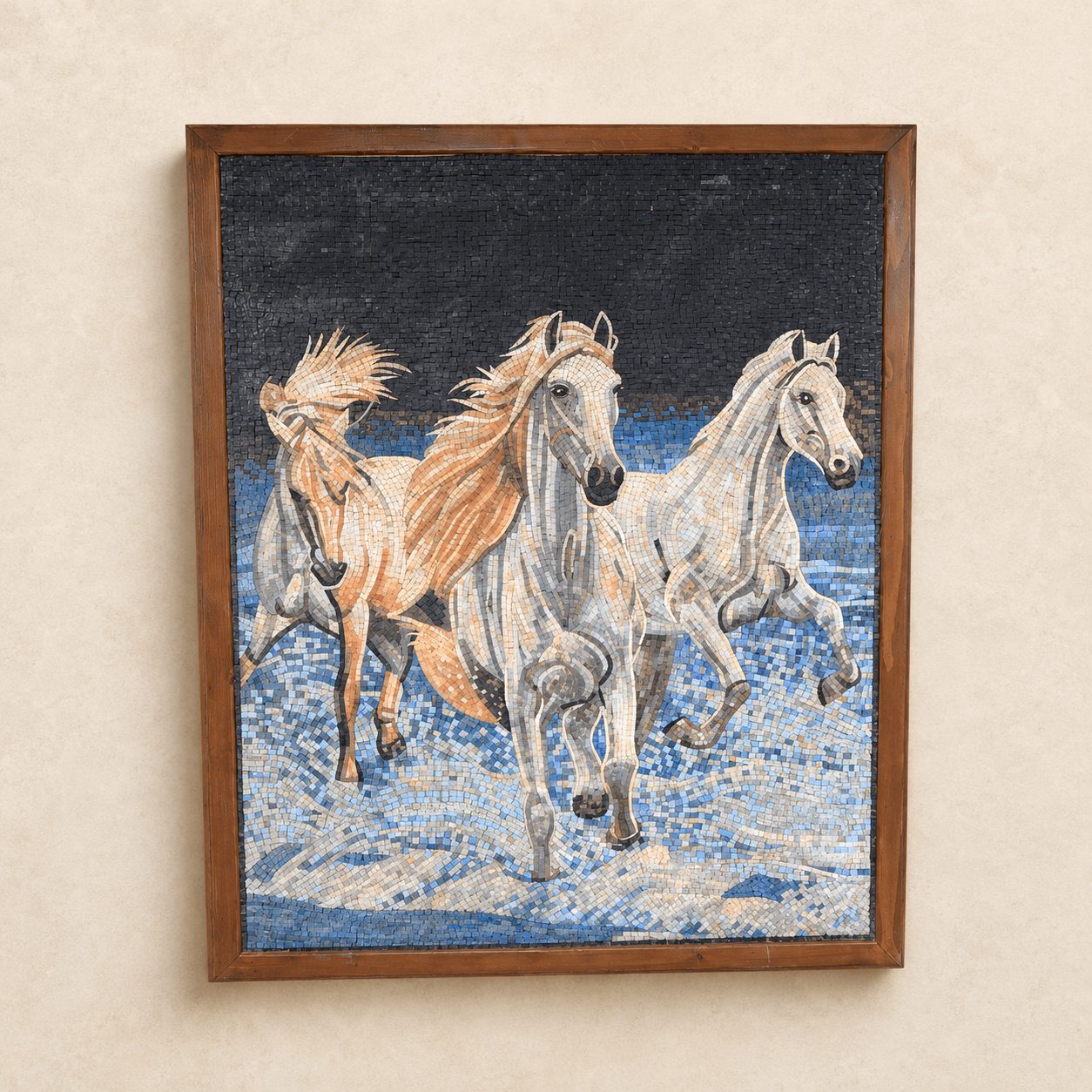
Not all mosaics are built from the same material. Historically, mosaic artists have worked with glass, ceramic, shell, and stone, each material bringing its own look and feel to a finished piece. The Bethlehem Mosaic collection featured through Holy Land Shopping centers on natural Holy Land stone, and understanding what that choice actually means, in terms of color, texture, and character, helps explain why so many buyers are drawn to stone mosaics for devotional art and meaningful gifts.
What Makes a Mosaic a "Stone" Mosaic
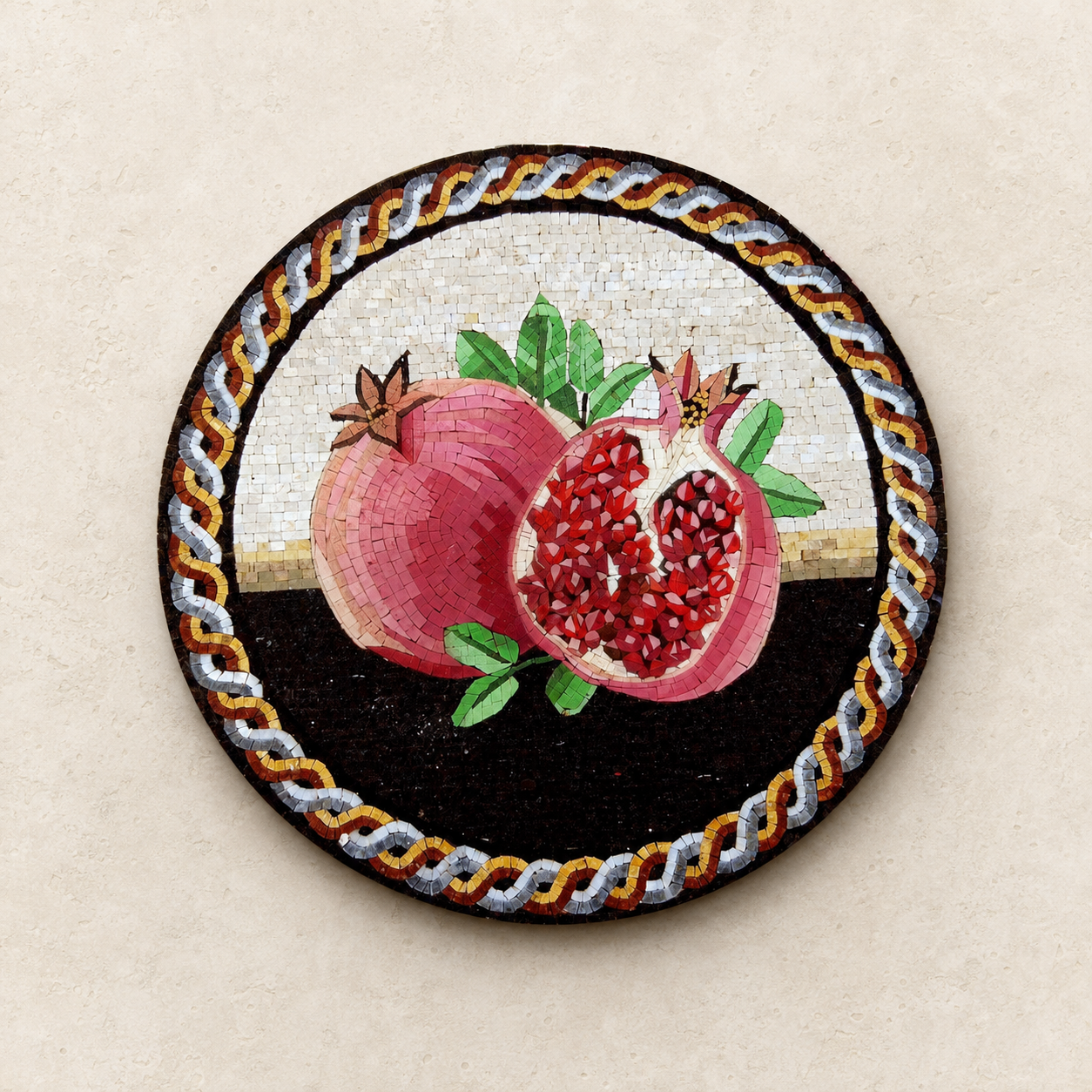
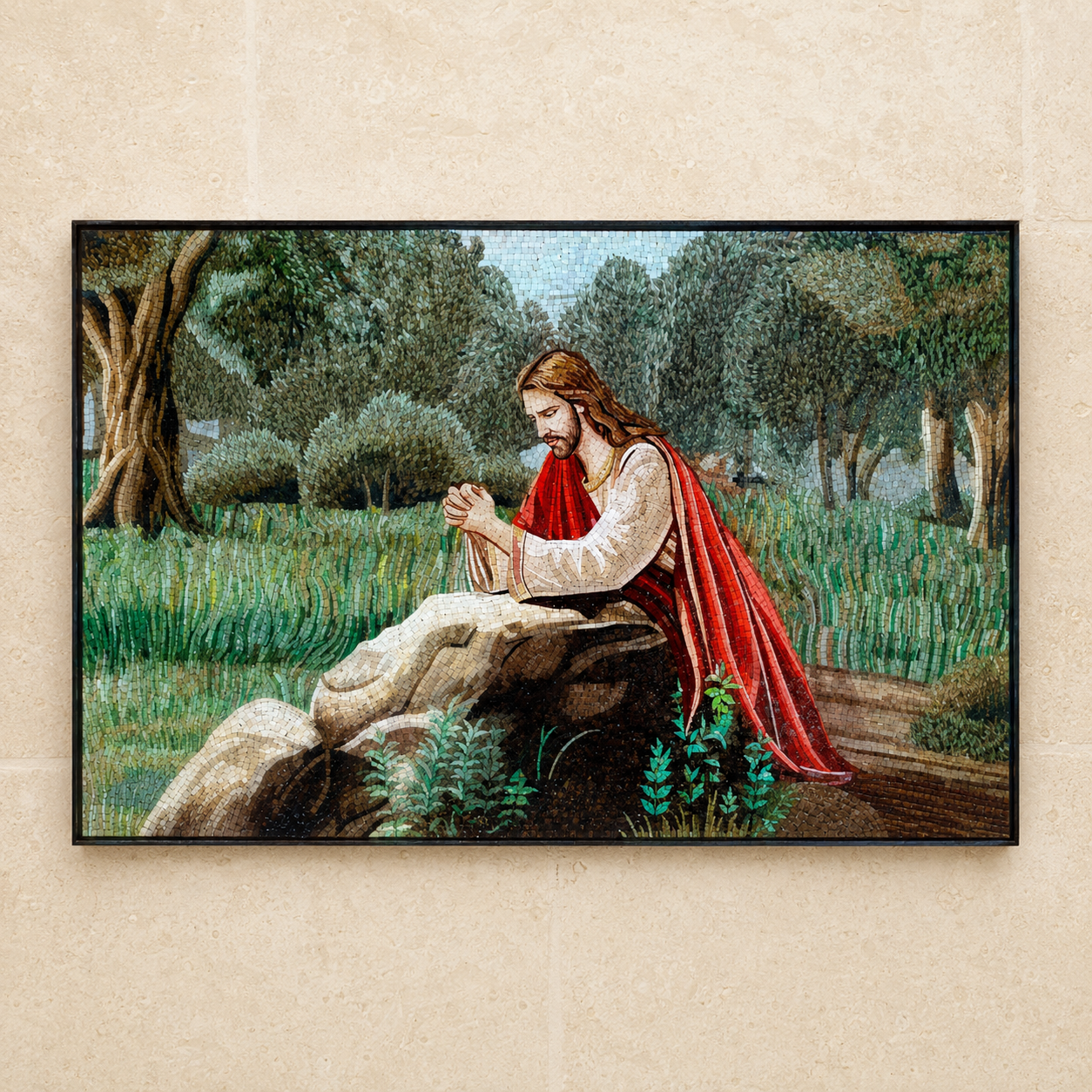
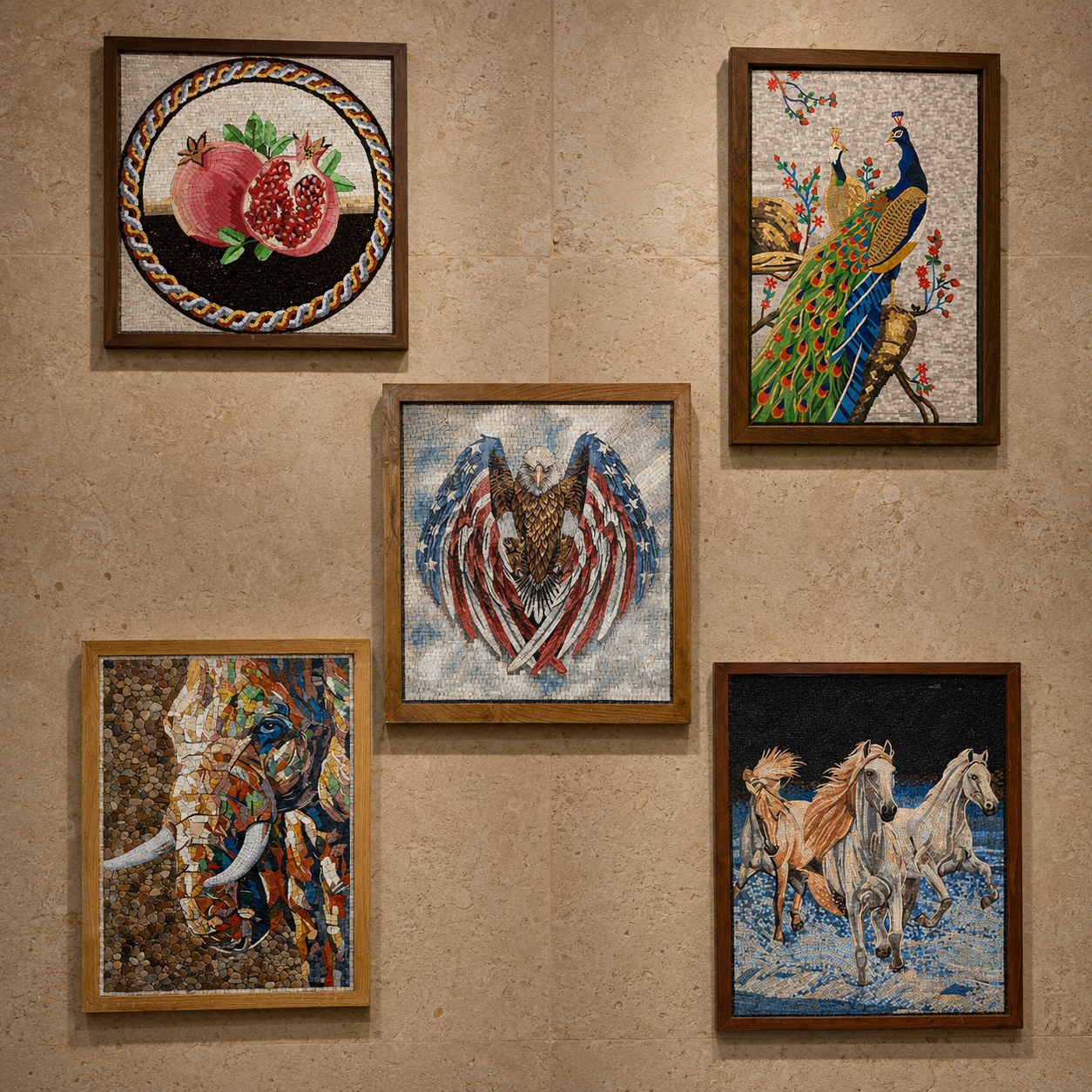
A stone mosaic is built from tesserae cut from natural stone rather than manufactured glass or fired ceramic. Because the raw material comes directly from the earth, each piece of stone carries whatever color, grain, and mineral variation occurred naturally as it formed, long before an artisan ever touched it. When these pieces are cut into tesserae and set together, that natural variation becomes part of the finished artwork rather than something smoothed away in production.
Color and Tone in Natural Stone
Natural stone used in mosaic work typically spans a warm, earthy palette, creams, sandy beiges, ochres, warm browns, and deeper charcoal tones, rather than the very saturated, uniform colors possible with dyed glass. This does not make stone mosaics less vivid; it gives them a different kind of visual richness, one built from subtle gradations of natural color rather than flat blocks of manufactured pigment. Artisans work with this palette deliberately, selecting stone pieces so that light and dark tones fall in the right places to suggest shading, folds of fabric, or the contours of a face.
Texture, Veining, and Depth
Because it is a natural material, stone also brings texture and veining that no two tesserae share exactly. Under close inspection, a stone mosaic often reveals faint striations, small mineral flecks, or gentle shifts in surface texture from one tessera to the next. From a normal viewing distance, these details blend into an overall sense of depth and organic texture that is difficult to replicate with a uniformly smooth material. This is part of why a finished stone mosaic can look subtly different depending on the light in a room, and why photographs, however careful, do not always capture the full tactile character of the surface.
Stone Compared with Glass and Ceramic
Glass and ceramic tesserae have their own long and respected place in mosaic history, particularly in the brilliant, glowing wall mosaics associated with Byzantine church decoration, where glass tesserae set with gold leaf were prized for how they caught candlelight. Stone offers a different aesthetic: quieter, more grounded, and closely tied to the physical landscape it came from. Neither approach is objectively superior; they simply produce different visual effects and appeal to different sensibilities. Buyers drawn to Holy Land stone mosaics often describe the appeal in terms of authenticity and connection to place, a sense that the material itself carries meaning, rather than purely a preference for one visual style over another.
Why Buyers Value the Grounded Character of Stone
For many collectors, pilgrims, and gift-buyers, a mosaic built from Holy Land stone feels like more than a decorative object. It is a small, physical piece of the region rendered into a devotional or meaningful image, its natural variation a reminder that the piece was shaped by hand rather than mass-produced. This grounded, tactile quality is a large part of why stone mosaics remain popular for churches, homes, and gifts intended to carry lasting significance.
How Natural Stone Ages and Wears
Natural stone is a notably stable, long-wearing material compared with many alternatives used in decorative art. It does not fade in the way that some dyed or printed materials can over years of light exposure, and it resists everyday wear well when displayed indoors under normal conditions. This durability is part of why stone has been used in mosaic art for so many centuries, from ancient floors that still survive today to devotional wall art intended to remain meaningful for decades.
That said, like any handmade object, a stone mosaic benefits from sensible care. Dust, moisture, and rough handling can all affect a piece over time regardless of how durable the underlying material is, so a little attention goes a long way toward keeping a mosaic looking its best. Our companion guide on how to care for and display stone mosaic art covers cleaning, handling, and display considerations in more detail.
To understand how these stone tesserae are actually cut, selected, and set into place, read our companion article on how Bethlehem mosaics are made. If you are curious about the broader tradition this craft comes from, see the history of mosaic art in Bethlehem, and if you are further along in choosing a piece for your own home or church, our buyer's guide to handmade mosaics covers practical questions worth asking. You can also explore the full range of subjects on the Bethlehem Mosaic homepage.