 Bethlehem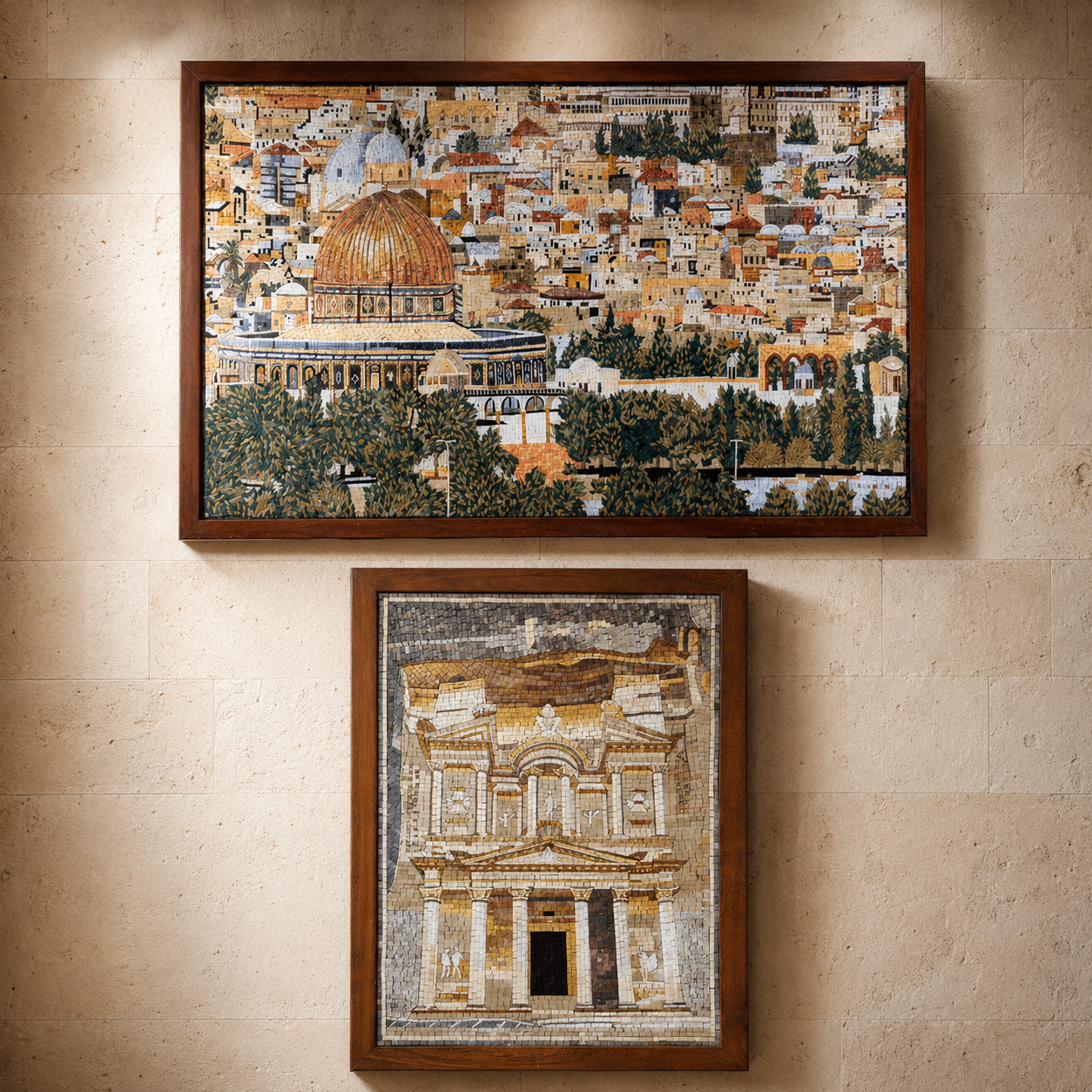
Mosaic art is one of the oldest and most enduring visual traditions in the world, and understanding its story helps explain why a Bethlehem mosaic feels different from a printed reproduction or a mass-produced wall decoration. The basic idea, small individual pieces called tesserae, set closely together until they form a complete image, has remained essentially unchanged for thousands of years, even as the materials, subjects, and settings around it have shifted with every era and region that adopted the craft.
When we talk about the history of mosaic art in Bethlehem, it is worth being precise about what that means. No single, continuously operating workshop connects the ancient world to the artisans working in Bethlehem today. Instead, Bethlehem sits within a much broader regional and religious tradition of mosaic-making that stretches across the Mediterranean and the Holy Land, one that later generations of local craftspeople have inherited, studied, and reinterpreted in their own way.
Mosaic Art Across the Ancient Mediterranean
Long before mosaics became associated with churches and Christian imagery, the technique was already well established across the ancient Mediterranean world. Early civilizations experimented with small pieces of stone and shell, arranging them into decorative floors, walls, and public spaces. Over time, these techniques were refined and passed between cultures through trade routes, craftsmen, and shared building traditions, gradually developing greater precision in cutting tesserae and greater ambition in the scenes they could depict.
As the craft matured, artisans discovered that tesserae could do more than decorate; they could tell stories. Figures, patterns, and symbolic scenes began to appear in floors and walls across the region, laying the groundwork for the more elaborate religious mosaics that would follow in later centuries.
Byzantine Mosaics and the Rise of Sacred Imagery
One of the most significant developments in the story of mosaic art came with the Byzantine period, when mosaic techniques reached remarkable heights of detail and symbolism inside churches and other sacred buildings. Byzantine artisans used small tesserae, often glass set with gold leaf, to create luminous images of Christ, the Virgin Mary, saints, and biblical scenes on the walls and ceilings of major religious sites. These mosaics were not created purely for decoration; they were intended to teach, to inspire devotion, and to bring scripture and sacred history to life for worshippers who might never read a written text.
This era firmly established mosaic art as a devotional medium in the Christian world, closely tied to church architecture and the visual language of faith. It is this broader tradition, mosaic art as a way of expressing sacred subjects in lasting, hand-assembled form, that later artisans throughout the Holy Land would draw upon, including those working in and around Bethlehem.
- Ancient Mediterranean: Early stone and shell tesserae used in decorative floors and civic buildings.
- Greco-Roman period: Increasing detail, figures, and narrative scenes rendered in small tesserae.
- Byzantine era: Glass and gold-leaf tesserae used to create luminous religious imagery inside churches.
- Holy Land craftsmanship today: Artisans in Bethlehem and the surrounding region continue hand-assembling mosaics, often in natural stone, for devotional and decorative use.
Bethlehem's Place in a Living Tradition
Bethlehem holds a distinct place in Christian tradition as the city where, according to Christian belief, Jesus was born. For generations, the city has been a center for the production of religious art and keepsakes made for pilgrims, visitors, and Christians around the world, from carved olive wood nativity scenes to devotional paintings and, in time, mosaic artwork made from local and regional stone.
It would be inaccurate to claim that this represents one unbroken workshop lineage reaching back to antiquity, or to assign a precise date to when mosaic-making specifically began as a local trade in Bethlehem. What can be said is that the city's artisans work within, and draw inspiration from, the much older regional tradition described above, adapting it to modern tools, contemporary designs, and the tastes of today's visitors and collectors, while keeping the handmade, tessera-by-tessera method at the center of the craft.
How Today's Artisans Carry the Tradition Forward
Contemporary Bethlehem artisans, including the craftspeople behind the mosaics offered through Holy Land Shopping, continue this long tradition using natural Holy Land stone rather than glass or ceramic tesserae. This choice connects each finished piece back to the physical landscape of the region, giving collectors and gift-buyers something more than a picture: a small, tangible piece of stone shaped by hand into a devotional or decorative image.
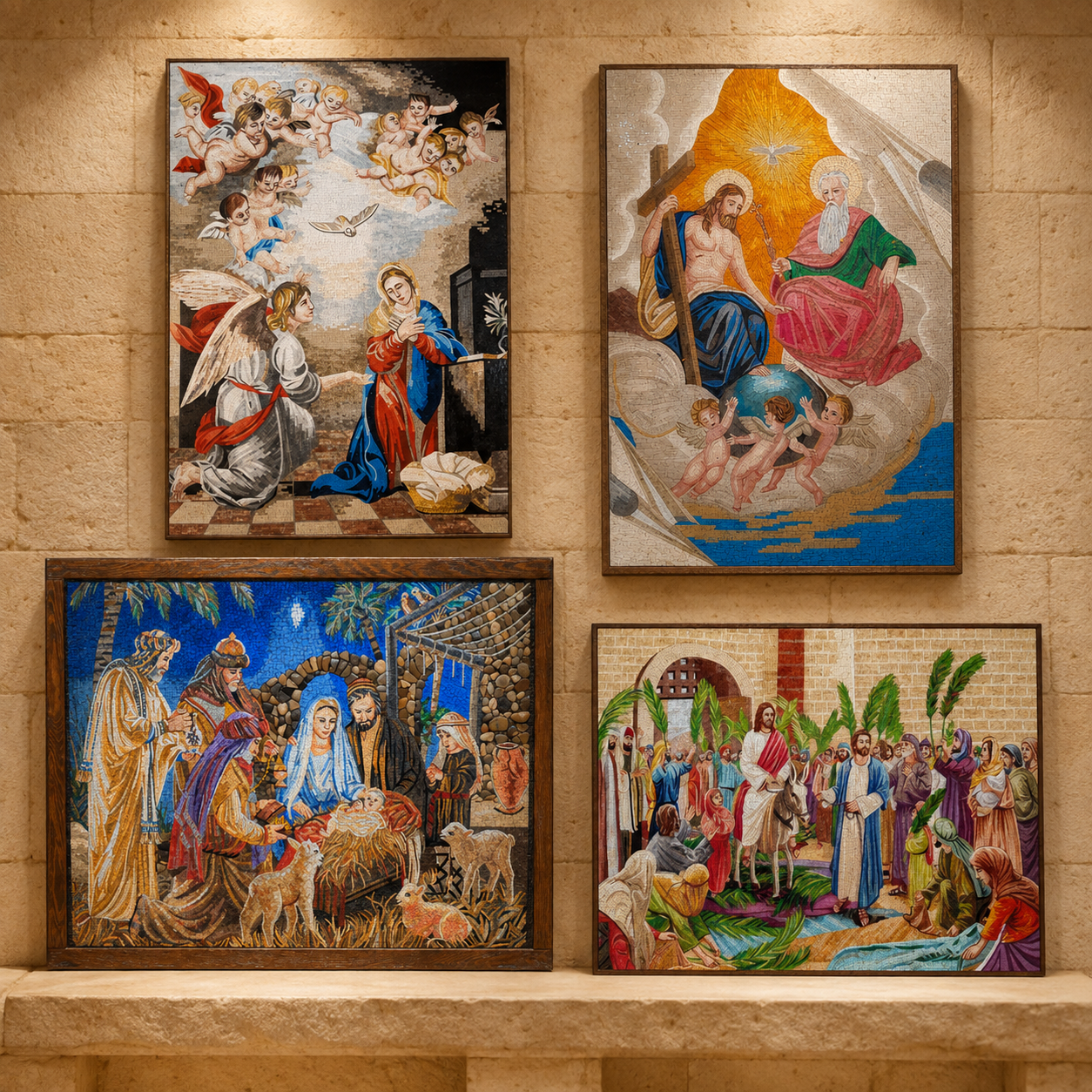
The subjects chosen by today's artisans often echo those favored across centuries of Christian art, the Good Shepherd, the Madonna and Child, biblical scenes, and symbols of faith, while also expanding into wildlife, landscapes, and custom commissions requested by individual customers. In this way, a Bethlehem mosaic bought today is best understood not as a replica of a specific historical artifact, but as a contemporary expression of an art form with genuinely ancient roots, made in a city with a unique and enduring connection to Christian history.
For readers who want to understand more about how these pieces are physically constructed, our guide to how Bethlehem mosaics are made walks through the process step by step, while our article on Holy Land stone mosaics looks more closely at the materials themselves. Readers drawn specifically to the Christmas story may also enjoy our piece on Nativity mosaics from Bethlehem. You can also read more about the wider project on the Bethlehem Mosaic homepage.