 Bethlehem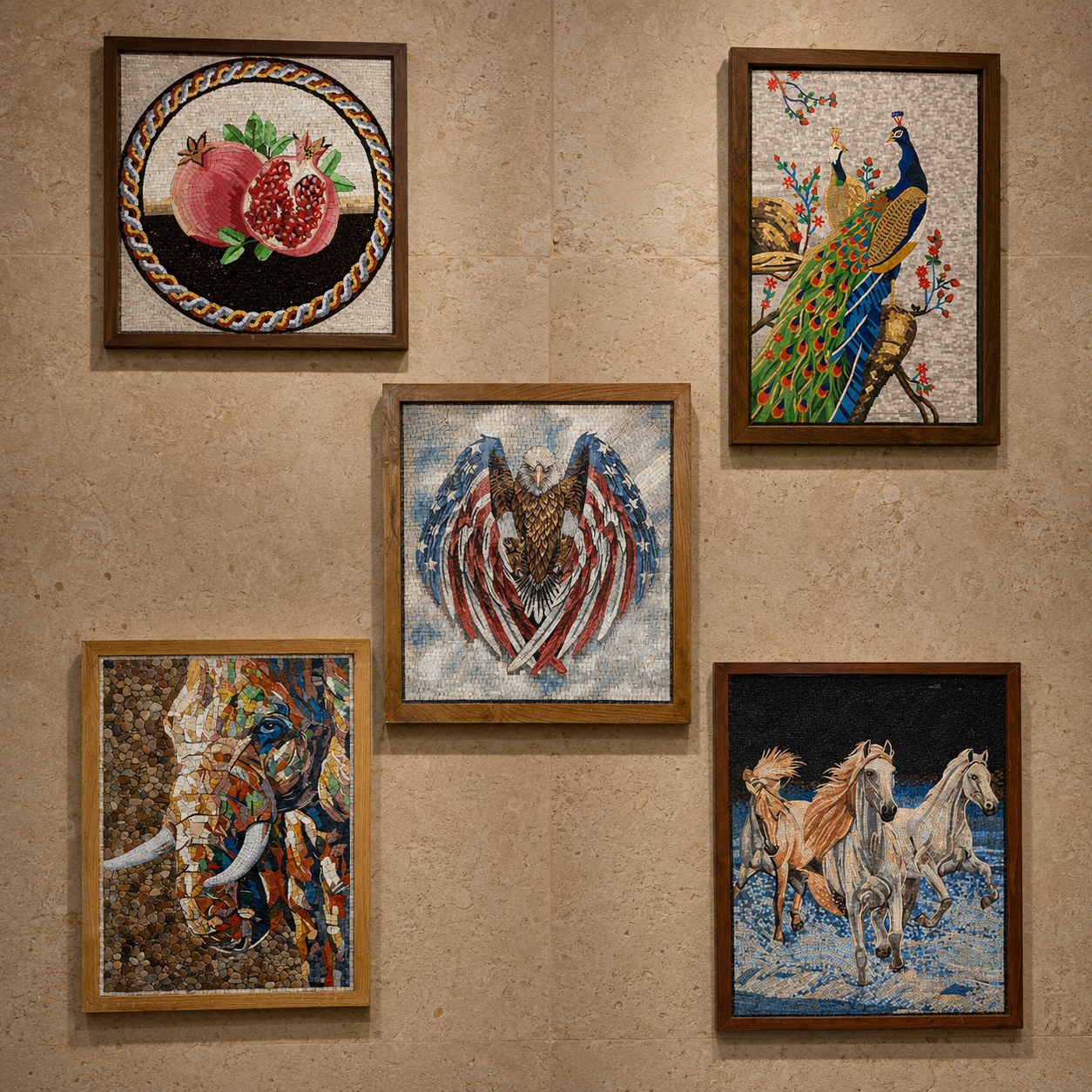
While devotional and biblical subjects make up a large part of Bethlehem mosaic art, the same tesserae technique extends naturally into nature, wildlife, and custom subjects chosen by individual buyers. This wider range gives collectors, interior designers, and gift-buyers more ways to bring handmade stone artwork into a home or office, even when the intended piece is not religious in nature.
Beyond Religious Subjects: A Wider Artistic Range
Mosaic art's core technique, small stone tesserae set carefully by hand, works just as well for a peacock's feathers or a horse's mane as it does for a robe or a halo. Artisans working in this wider range apply the same patience and attention to color and shading, simply directed toward different subject matter.
Pomegranates, Peacocks, and Symbolic Nature Motifs
Pomegranates and peacocks are two recurring motifs in the wider Bethlehem mosaic collection, valued both for their decorative appeal and for symbolic associations that have long accompanied them in art from the region, abundance and fruitfulness in the case of the pomegranate, and beauty or renewal in the case of the peacock. These designs often use rounded, medallion-style compositions that suit smaller wall spaces or paired display.
Eagles, Elephants, and Horses
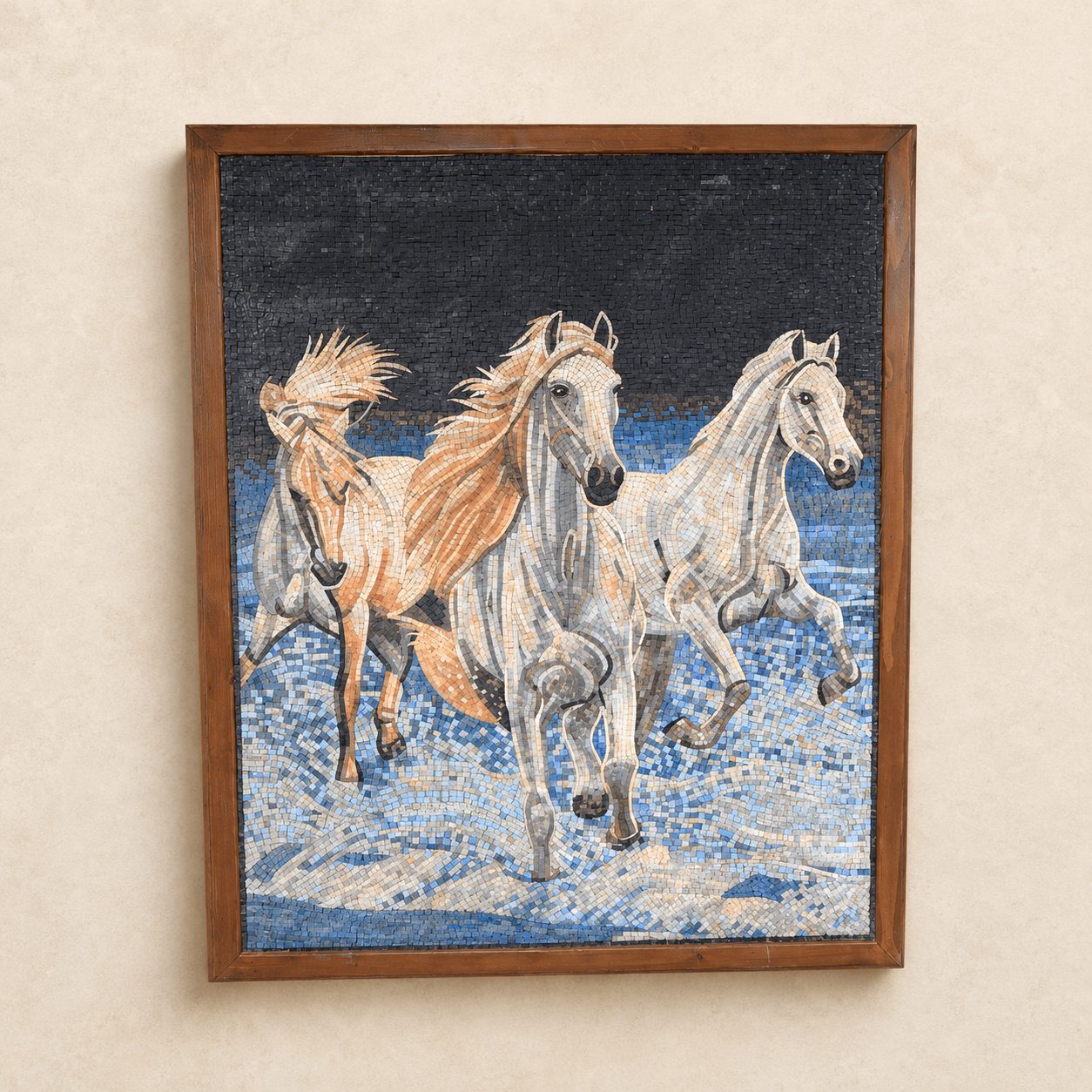
Animal subjects such as eagles, elephants, and horses appear frequently as well, chosen more for their visual strength and character than for specific religious symbolism. A mosaic of three horses in motion, for example, or a solitary eagle in profile, can serve as a striking decorative centerpiece independent of any devotional meaning, appealing to buyers looking for handmade art with natural, earthy warmth rather than an explicitly religious theme.
Landscapes and Landmarks
Beyond animals and symbolic motifs, the collection also includes designs inspired by landmarks connected to the wider region, such as Jerusalem's cityscape or the Treasury at Petra. These pieces let buyers bring home a sense of place, a recognizable skyline or facade rendered in stone, without necessarily carrying religious symbolism, making them popular as gifts connected to travel or heritage rather than faith alone.
Matching a Nature or Wildlife Mosaic to Your Space
Because nature and wildlife mosaics are not tied to a specific devotional purpose, they offer more flexibility in where they can be displayed: a study, a dining room, an office reception area, or alongside religious pieces as a complementary, more decorative accent. A pomegranate medallion or a peacock design, for example, can soften a room built primarily around devotional art, adding warmth without competing with a nearby Good Shepherd or Virgin Mary piece.
Landmark-inspired designs, such as a Jerusalem cityscape or the Petra Treasury, appeal particularly to travelers and pilgrims looking to commemorate a specific trip or connection to the region, making them popular as personal keepsakes as well as gifts for someone who has visited or hopes to visit the Holy Land. Whatever subject you choose, natural stone tesserae bring the same warm, grounded character described in our article on Holy Land stone mosaics, whether the finished image is devotional, decorative, or entirely custom.
How to Prepare a Custom Mosaic Inquiry
For buyers who do not see exactly what they are looking for among existing designs, a custom mosaic may be worth inquiring about. While we cannot promise that every custom request will be accepted, artisans are generally better able to respond to a clear, well-prepared inquiry. Before reaching out, it helps to have the following ready:
- A clear reference image or description of the subject you have in mind.
- Your desired dimensions and orientation (portrait or landscape).
- A general sense of the color palette you would like the piece to use.
- Where the finished piece will be installed or displayed.
- Any deadline you are working toward.
- Your shipping destination, since this affects packing and logistics.
With this information in hand, you can contact Holy Land Shopping directly to discuss whether a custom design is feasible for your project. Custom inquiries are also welcome for nature and wildlife subjects not currently represented in the collection, provided the request is clear enough for an artisan to assess feasibility.
To see how the underlying craftsmanship compares across religious and non-religious subjects alike, read how Bethlehem mosaics are made and Holy Land stone mosaics. If you are still deciding what kind of piece suits your space, our guide to choosing a handmade mosaic covers practical questions worth asking before you order. You can browse the full range of subjects on the Bethlehem Mosaic homepage.
A Wider Range Without Losing the Handmade Character
Whatever the subject, nature, wildlife, landmark, or custom, every piece in this wider range shares the same handmade character described throughout the Bethlehem Mosaic collection: natural stone tesserae, cut and set by hand, rather than a printed or machine-produced image. This consistency means buyers can move between religious and non-religious subjects within the collection with the same expectations around craftsmanship, material, and the gentle, natural variation that comes with handmade stone art.