 Bethlehem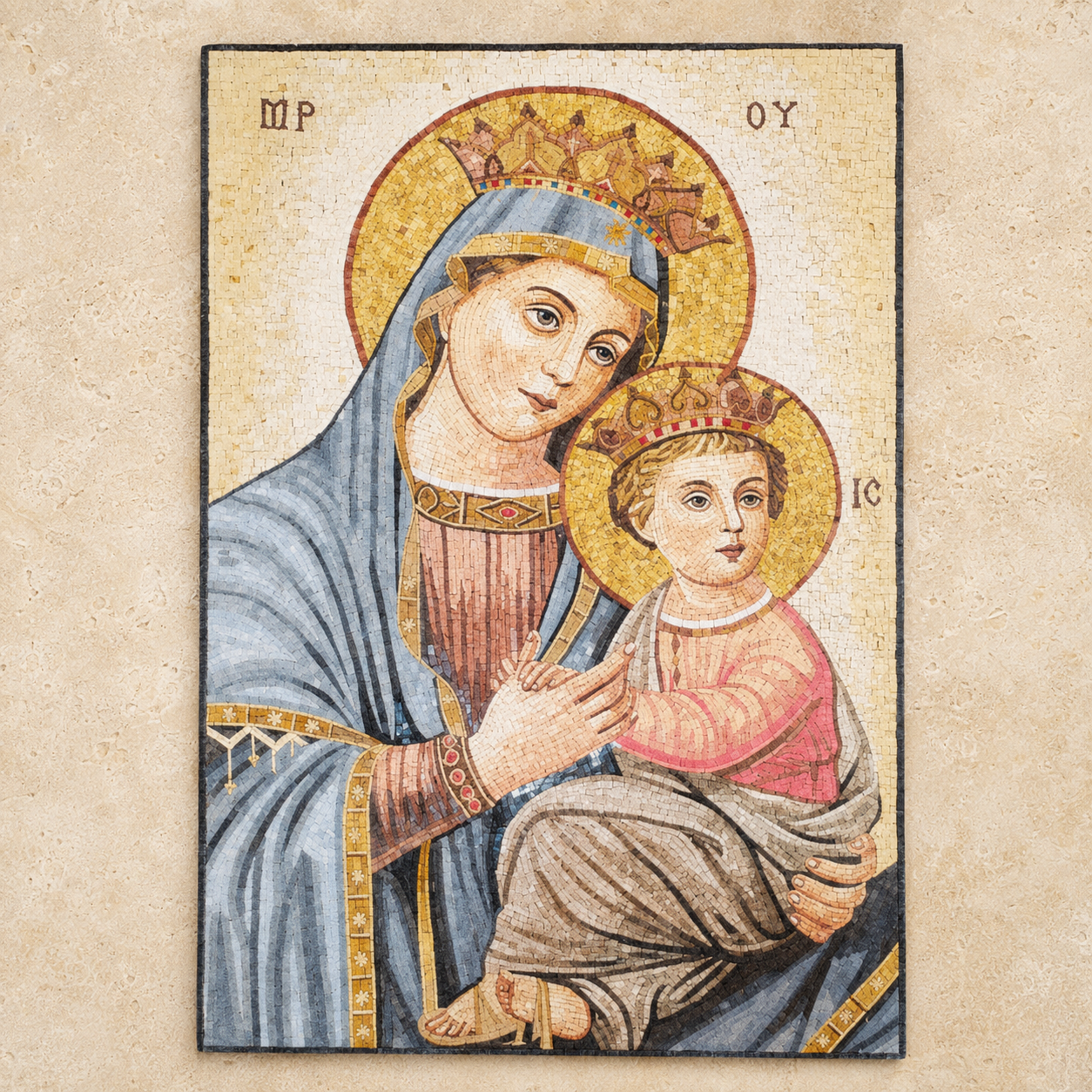
Among all religious subjects rendered in mosaic art, few carry as much devotional weight as the Virgin Mary. Images of Mary have been part of Christian visual tradition for centuries, appearing in church mosaics, icons, and personal devotional art across many cultures. This article looks at some of the most common ways Mary is depicted in mosaic form, and what these choices of composition, color, and gesture tend to express.
A Devotional Subject with Centuries of Artistic History
Depictions of Mary span an enormous range of styles, from formal Byzantine icons to warmer, more intimate portraits. Rather than following one single fixed tradition, Marian art has developed many regional and denominational variations over time. A Bethlehem mosaic honoring Mary draws on this broad, layered history rather than any single narrow tradition, and different pieces in the collection may lean toward different visual influences.
Madonna and Child
The most widely recognized Marian composition is the Madonna and Child, showing Mary holding the infant Jesus. This image emphasizes tenderness, maternal care, and the humanity of the Nativity story alongside its sacred significance. In mosaic form, this scene rewards careful attention to gesture, the tilt of Mary's head, the placement of her arms, since these small details carry much of the emotional weight of the piece.
Our Lady of Grace and Queen of Peace Themes
Beyond the Madonna and Child, other titles and themes associated with Mary appear across devotional art, including imagery evoking grace, intercession, and peace. These compositions often show Mary alone, in a more contemplative or regal pose, sometimes with a crown, halo, or other symbolic elements. Such pieces are frequently chosen for prayer spaces, churches, and quiet corners of a home set aside for reflection.
Byzantine-Inspired Compositions
Some Marian mosaics draw visibly on Byzantine artistic conventions: flatter, more stylized figures, gold or warm-toned backgrounds, and a formal, iconic quality rather than naturalistic realism. This style connects a modern mosaic back to the long history of Byzantine church decoration discussed in our article on the history of mosaic art in Bethlehem, without claiming that any specific piece is a direct copy of a particular historic mosaic.
Reading Color, Gesture, and Gaze
Across all of these variations, a few visual choices recur again and again: the direction of Mary's gaze, whether toward the viewer, toward the infant Jesus, or turned gently downward; the color of her robe, often blue or deep red depending on the tradition being referenced; and the overall posture of the figure, upright and formal or softly inclined. None of these choices follow one single fixed rule across every piece, but noticing them can help you choose an image that feels right for the space or person you have in mind.
Marian Mosaics as Gifts and Keepsakes
A Virgin Mary mosaic is often chosen as a gift for occasions with personal or spiritual significance: a baptism, a first communion, a wedding, a new home, or simply as a meaningful keepsake for someone with a strong devotion to Mary. Because the image draws on such a long and widely shared tradition, it tends to feel appropriate across a broad range of Christian backgrounds and family traditions, rather than being tied to one narrow denominational context.
When choosing a Marian mosaic as a gift, it can help to think about the recipient's own devotional preferences, whether they are drawn to a warmer, more maternal Madonna and Child image, or to a more formal, iconic composition in the Byzantine style. Either approach can make a lasting, personal gift, and the handmade nature of the piece, built tessera by tessera from natural Holy Land stone, adds a further layer of meaning beyond the image itself, distinguishing it from a mass-produced print or statue chosen for the same occasion. Because sizes and framing vary across the collection, it is worth confirming the exact dimensions of a piece before ordering it as a gift, particularly if you have a specific wall or shelf already in mind for its display.
Choosing a Virgin Mary Mosaic for Your Home or Church
When selecting a Virgin Mary mosaic, it helps to think about where the piece will be displayed and what feeling you want it to bring to that space: warmth and maternal tenderness, quiet formality, or devotional focus for prayer. Our broader guide to choosing a handmade mosaic covers practical questions of size, orientation, and placement that apply here as much as to any other subject.
For readers interested in related devotional themes, see our articles on Nativity mosaics from Bethlehem, which naturally include Marian imagery, and Christian mosaic symbols and their meanings for a wider look at recurring Christian iconography. You can view the current selection of Virgin Mary designs in the Virgin Mary mosaic collection on Holy Land Shopping, or return to the Bethlehem Mosaic homepage for an overview of the full range.